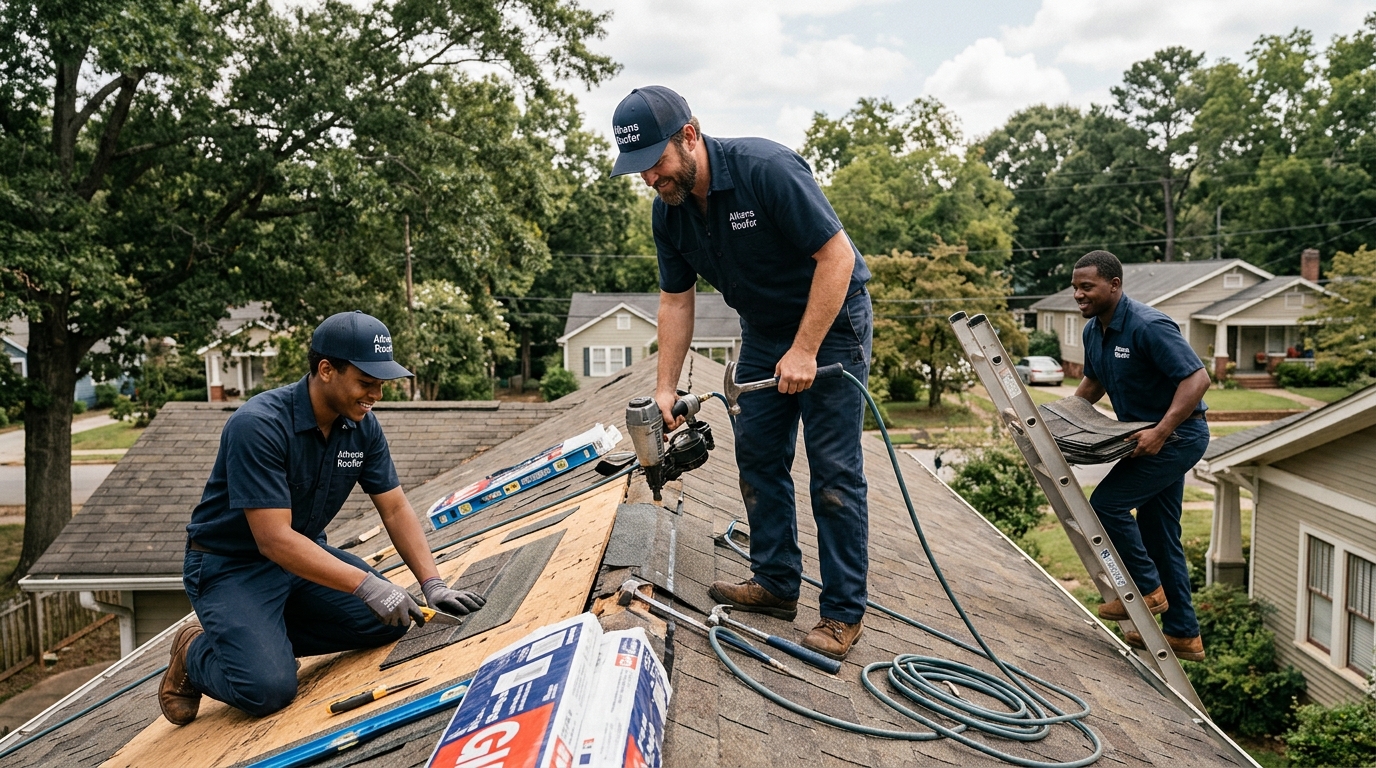
A sound roof repair starts by identifying where water enters, which may be several feet from the ceiling stain. Water often follows rafters, roof decking, nails, or pipes before dripping into an attic or finished room, so patching directly above the visible stain can miss the real opening.
Our inspection focuses on common failure points such as lifted shingles, exposed fasteners, cracked pipe boots, loose counterflashing, damaged valleys, and poorly sealed roof penetrations. We also check the underside of the decking when attic access is available because dark staining, damp insulation, and rusted nail tips can help confirm the leak route.
Athens heat, humidity, heavy rain, and wind can expose small defects quickly. Rubber vent collars may split after repeated sun exposure, sealant can pull away from metal flashing, and wind can crease shingles without tearing them off completely.
The recommended work depends on how far the damage extends. A localized repair may be appropriate when the surrounding roof remains serviceable, while widespread brittle shingles, repeated leaks, or soft decking may call for a broader discussion before more patchwork is added.